
IT Secretary S Krishnan advocates for India to pursue "strategic autonomy" in the AI ecosystem by building domestic capabilities and diversifying global supply chains. He emphasized avoiding overdependence on single sources while integrating into trusted global networks, and also highlighted the need to consider an AI law and regulatory framework.

The Supreme Court of India has issued a strong warning against the use of "non-existent, fake, and hallucinated" judgements generated by artificial intelligence (AI), likening it to "the release of methyl Isocyanate in the province of law and justice: invisible, insidious, and catastrophic." The court set aside an NCLT verdict that relied on such AI-generated precedents.

'The government has to act as one unit since the threat from these newer models will soon scale up.'

India's IT Secretary S Krishnan announced that the government is considering a dedicated regulatory framework for Artificial Intelligence, moving beyond existing IT rules to address challenges like deepfakes and synthetic content. This comes as global policymakers grapple with AI's rapid emergence and its implications.

A new report highlights that publishers need to adopt clear records, AI-specific provisions, and transparent disclosure of AI use to manage legal and commercial risks as the copyright framework around artificial intelligence evolves. Jointly developed by SS Rana & Co and Ficci, the 'Copyright In The AI Age' report emphasises practical governance measures while courts and regulators work on legal principles. It also addresses concerns about authorship, creators' rights, and research integrity amidst increasing AI integration in publishing.

Haryana Chief Minister Nayab Singh Saini met with a World Bank delegation to discuss advancing Artificial Intelligence, digital governance, and skill development in the state. The discussions focused on leveraging technology to enhance citizen services, with plans to showcase Haryana's AI Sandbox globally and develop a dedicated AI model for the state.

Union Minister Ashwini Vaishnaw indicates India may require a new legal framework for Artificial Intelligence, as the current IT law predates AI's rapid emergence. The government aims to balance innovation with regulation, engaging with the industry to ensure citizen safety while fostering technological growth.

The judgment is India's first to examine AI companies' use of copyrighted works for foundation models, setting an analytical framework for Section 52 of the Copyright Act.

Uttar Pradesh authorities have implemented extensive security and logistical measures for the annual Kanwar Yatra, which began on Thursday and concludes on August 11. These include AI-enabled surveillance, additional security personnel, medical camps, dedicated control rooms, and traffic diversions, all aimed at ensuring a "zero incidents and zero accidents" pilgrimage for lakhs of devotees.

Personality rights violations are increasingly being used as vehicles for financial fraud, with unsuspecting consumers misled by fabricated endorsements.

Union Minister Nitin Gadkari has filed a civil suit against Meta, X Corp, Google LLC, and unknown persons in the Bombay High Court over "defamatory" deepfakes and AI-generated posts concerning the ethanol policy. The court will hear the matter on August 5, with Gadkari seeking a permanent injunction and immediate takedown of the fake content, which he claims has harmed his reputation.

If AI-generated material is found to be 'false, fabricated, misleading or inaccurate', the person filing it will be accountable and cannot cite the AI-generated nature of the material as a defence.

The government is questioning the visiting Meta team on whether the company is adhering to the law of the land, following summons to the social media giant over temporary restriction of Prime Minister Narendra Modi's Facebook post recently, sources said on Thursday.
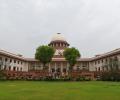
The draft regulations for use of AI in courts 'shall apply to the use, deployment, or integration of AI in any judicial, adjudicatory or administrative function of the Supreme Court of India, high courts, and all courts including the Tribunals and statutory Commissions performing adjudicatory functions, within the territory of India'.

Chief Justice of India Surya Kant stated that the Supreme Court views technology as an aid to human reasoning, not a replacement, and emphasised developing "Swadeshi Jurisprudence" tailored to India's unique conditions. He highlighted efforts to create an indigenous AI ecosystem for the judiciary and stressed that AI cannot substitute human judgment, empathy, or ethical discernment.
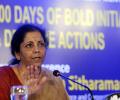
The Rajya Sabha has passed The Bankers' Books Evidence Bill, 2026, which aims to replace a British-era law and allow digital and virtual records to be admissible as evidence in courts. This legislation aligns with contemporary digital banking practices and extends a uniform evidential framework to various financial entities, including NBFCs and fintech companies. Finance Minister Nirmala Sitharaman highlighted the bill's role in strengthening public confidence and safeguarding customer privacy. The bill's passage, however, saw an Opposition walkout over unrelated issues.

The Bombay High Court has ordered major social media platforms, including Meta, X Corp, and Google LLC, to immediately remove 'vile, abusive, obscene, and defamatory' deepfakes and AI-generated content targeting Union Minister Nitin Gadkari, emphasising the urgent need for online platforms to curb malicious digital content.
Union Health Minister J P Nadda has emphasised the need for sound regulation, ethical oversight, and equity in the application of Artificial Intelligence (AI) to healthcare, speaking at the World Health Assembly in Geneva.
A 20-year-old woman, Chandni, died under suspicious circumstances in Unnao, Uttar Pradesh, less than a month after her marriage. Her family has accused her husband and in-laws of dowry harassment and murder, claiming they demanded a car despite receiving a motorcycle at the wedding. Police are investigating the matter, questioning the in-laws, and awaiting the post-mortem report.
The BJP held a torchlight procession in Ranchi, Jharkhand, protesting the state's law and order situation and the rising number of missing children. The protest specifically highlighted the case of three children, including twin brothers, who have been missing for 13 days, with the BJP demanding their immediate recovery and intensified police action.

The Supreme Court has been informed that the Aircraft Accident Investigation Bureau's final draft report on the June 2025 Air India flight AI-171 crash in Ahmedabad will be submitted in October. The court is hearing petitions seeking an independent probe into the accident, which claimed 260 lives.

Finance Minister Nirmala Sitharaman clarified that the Merchant Discount Rate (MDR) on digital transactions applies to merchants, not customers, and aims to support banks and fintech in infrastructure investment. She countered Congress leader Jairam Ramesh's claims, stating that a committee will decide on MDR only after Parliament passes the Taxation and Other Laws (Amendment) Bill, 2026, a process currently stalled by parliamentary disruptions.
Cactus Technology Solutions Private Limited has been empanelled by the National e-Governance Division (NeGD) to provide AI and machine learning expertise for government-led digital initiatives.

The Indian government is questioning whether Meta's recommendation systems and paid content promotion align with its status as an intermediary under the IT Act, raising concerns about the company's liability for content it actively decides to show users.

The Hyderabad City Police are actively cautioning young women against the emerging "rent boyfriend" cyber scam, a deceptive online trap designed to defraud and blackmail victims through fake companionship offers.
A study by researchers at Indraprastha Institute of Information Technology Delhi (IIITD) has used artificial intelligence to analyse over 118,000 recipes from 26 cuisines, revealing statistical 'laws' that govern cooking across cultures.
A study by researchers at Indraprastha Institute of Information Technology Delhi (IIITD) has used artificial intelligence to analyse over 118,000 recipes from 26 cuisines, revealing statistical 'laws' that govern cooking across cultures.

Former Rajasthan Chief Minister Ashok Gehlot has criticised the BJP government in Rajasthan over the state's law and order situation, claiming it is 'on the ventilator'. He cited NCRB data indicating a high number of rape cases and alleged that victims are being pressured when seeking justice.

BMW India CFO Carsten Lammers has expressed surprise at the extensive scale and prolonged duration of tax and Customs litigation in India, advocating for faster dispute resolution and simpler procedures to ensure business stability.
A Mumbai court granted anticipatory bail to a 21-year-old law student, Abhay Pratap, accused of selling obscene videos of self-styled godman Ashok Kharat online. The court noted the videos were already publicly available, deeming custodial interrogation unnecessary.

Experts urge internet platforms to adopt prevention-by-design and stronger AI systems to curb child sexual exploitation material and improve online child safety.

Uttar Pradesh DGP Rajeev Krishna stated that the state's law and order situation has significantly improved, with criminals losing their former confidence. He warned against anti-social elements using social media to intimidate and discussed ongoing probes into the Ayodhya Ram Mandir irregularities and the extradition of a drug trafficking kingpin. The DGP also highlighted the rising challenge of cybercrime and police efforts to combat it.
China has cancelled drone shows and suspended drone flights across several provinces following a small plane crash in Beijing that raised significant security concerns, especially near top leadership compounds. This move signals a tightening of low-altitude aviation regulations, impacting the burgeoning "low-altitude economy" and civilian drone use, with new laws classifying illegal drone use as a public security threat.
Kerala Electricity Minister Sunny Joseph has defended the appointment of his brother-in-law, Benny Thomas, as his Additional Private Secretary, citing Thomas's public service record and political experience. The appointment has sparked controversy, with the opposition CPI(M) accusing the minister of nepotism and hypocrisy, demanding his resignation.
Gujarat's Deputy Chief Minister Harsh Sanghavi conducted a high-level review meeting to assess the state's security situation, with a focus on maintaining public safety and addressing cybercrime.
Leader of Opposition Bhupinder Singh Hooda has called for a special session of the Haryana Assembly to address the state's deteriorating law and order situation. Citing central government and NCRB reports, Hooda highlighted Haryana's unsafe status, high organised crime rates, and alarming statistics on rapes, murders, and suicides, alleging the BJP government's negligence.

West Bengal Chief Minister Suvendu Adhikari outlined his government's priorities, focusing on strengthening the state's economy, attracting investment to create jobs, and improving law and order. He criticised the previous administration for alleged corruption and appeasement politics, while highlighting initial successes in border management and reducing criminal activities.
A 17-year-old girl, Jyoti Kumari, was allegedly beaten to death by her sister-in-law, Manu, during a family dispute in Nagla Chaube village, Kasganj district, Uttar Pradesh. Police have taken the accused into custody and are investigating the incident.

Financial Services Secretary M Nagaraju has urged banks to adopt the MuleHunter AI tool developed by RBI to identify and prevent mule accounts used in cyber financial frauds. The meeting also discussed 'Operation Octopus' by Hyderabad Police and emphasised coordinated efforts and intelligence sharing.

The Supreme Court has directed the Reserve Bank of India to prepare a standard operating procedure (SOP) within four weeks to deal with bank accounts linked to cyber frauds, including mule accounts. This directive is part of a broader effort to strengthen responses to cyber-enabled financial frauds, with the court also urging states and UTs to adopt and operationalise grievance redressal and money restoration modules.
